
Punctuation is one of those things children meet very early, but it can still feel surprisingly confusing.
A child might remember to put a full stop at the end of one sentence, then forget it in the next. They might use five exclamation marks because something is exciting. They might put commas wherever they would take a breath.
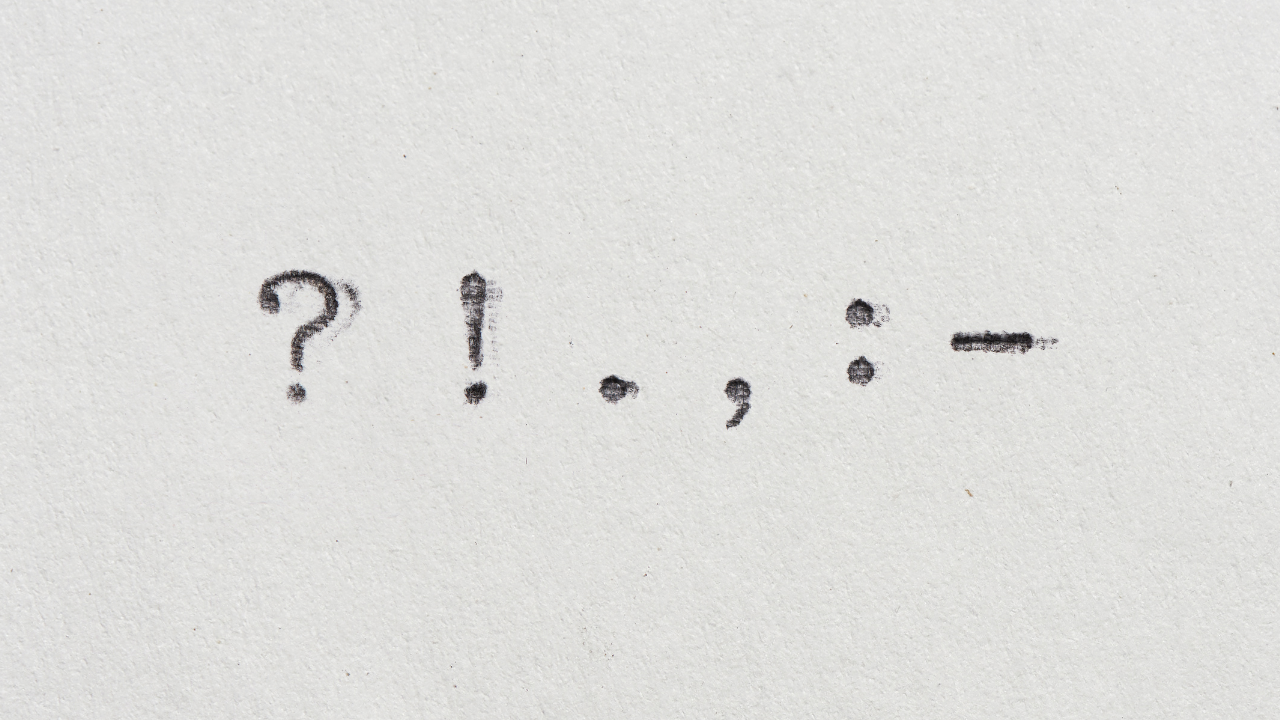
Punctuation helps the reader know where a sentence starts and ends, how ideas are grouped, who is speaking and what the writer means.
Not because punctuation magically makes writing good. It doesn’t.
But when children use punctuation with purpose, their writing becomes easier to read and their meaning becomes clearer.
That is the practical value.
Quick answer
Punctuation is the set of marks and written features that help readers understand how writing works. It includes things like full stops, capital letters, question marks, exclamation marks, commas, apostrophes, speech marks, brackets, colons, semi-colons, hyphens and paragraph breaks. Punctuation can support clearer reading and writing, but children do not learn it well through rules alone. The adult’s role is to show what punctuation does in real sentences, model it clearly and help children use it for meaning.
1. What is punctuation?
Punctuation helps readers make sense of written language.
At its simplest, punctuation shows how writing is organised.
It can show where a sentence ends. It can show that someone is asking a question. It can show that words are spoken aloud. It can separate items in a list. It can help avoid confusion.
For younger children, the most familiar punctuation marks are usually:
-
capital letters
-
full stops, or periods
-
question marks
-
exclamation marks
-
commas
-
apostrophes
-
speech marks, or quotation marks
Older primary and elementary children may also meet:
-
brackets, or parentheses
-
colons
-
semi-colons
-
hyphens
-
dashes
-
bullet points
-
paragraph breaks
The important point is that punctuation is not just about neatness.
It is about meaning.
Look at this sentence:
Let’s eat Grandma.
Now add a comma:
Let’s eat, Grandma.
The words are almost the same, but the meaning changes.
That is why punctuation matters.
So before children are asked to remember lots of punctuation rules, they need to understand the basic purpose.
Punctuation helps the reader.
That is the starting point.
2. Start with sentence boundaries
The first punctuation problem children need to solve is where one sentence ends and the next one begins.
Once children know that punctuation helps the reader, the next step is sentence boundaries.
This matters because many punctuation mistakes are not really about the mark itself. They are about children not yet being sure where the complete sentence is.
A child might write:
The dog barked loudly the cat ran away.
They may know what a full stop is. They may even know that sentences need capital letters and full stops.
But if they cannot hear or see where one sentence ends, they are left guessing where the punctuation should go.
That is why full stops, question marks and exclamation marks need to be taught alongside sentence sense.
A sentence is not just “a line of writing”. It is a group of words that work together to express a complete idea.
For example:
The dog barked.
This is a sentence.
The dog barked loudly.
This is also a sentence.
Because the dog barked loudly.
This feels unfinished on its own.
That matters.
If children do not understand the sentence, they may place punctuation by guessing.
They might write:
The dog barked loudly. The cat ran away.
Or:
The dog barked loudly, and the cat ran away.
Both of these work better because the sentence structure is clearer.
For younger children, keep the focus simple.
Ask:
-
Does this say a complete idea?
-
Where does the sentence end?
-
What mark do we need at the end?
-
Does the next sentence start with a capital letter?
This is enough to begin with.
Children usually need lots of practice saying sentences aloud, building them orally and then writing them down.
The key is sentence sense. Without that, punctuation becomes guesswork.
3. Show that end punctuation changes meaning
Full stops, question marks and exclamation marks help readers know how a sentence is working.
Once children are beginning to understand sentence boundaries, end punctuation is the next clear step.
A full stop shows that a statement or command has ended.
For example:
The rain stopped.
Put your coat on.
A question mark shows that the sentence is asking something.
For example:
Has the rain stopped?
Where is your coat?
An exclamation mark can show strong feeling, surprise, emphasis or an exclamation.
For example:
What a huge puddle!
Watch out!
This helps children see that punctuation is connected to meaning.
Try giving children the same words with different punctuation:
You are coming.
You are coming?
You are coming!
Each sentence feels different.
That is the learning.
The caution is that children can overuse exclamation marks because they seem exciting.
A page full of exclamation marks does not usually make writing better. It can make the writing feel noisy.
A useful classroom rule is:
Use an exclamation mark when the sentence really needs it.
That keeps the focus on reader impact.

4. Teach commas carefully and in context
Commas are useful, but they are also easy to overteach or misuse.
Commas often come after children have started to understand sentences.
That order matters.
If a child is not secure with full stops, commas can become confusing very quickly.
Children often hear that a comma shows where to pause.
That can help a little when reading aloud.
But it is not the whole rule.
A comma does not simply go wherever a reader takes a breath. Different readers pause in different places.
Commas usually help group ideas inside a sentence.
For example, commas can separate items in a list:
I packed socks, shoes, shorts and a towel.
They can come after some fronted adverbials:
After lunch, we went outside.
They can help make meaning clearer:
When the teacher called, the children lined up.
They can also separate extra information:
My brother, who loves football, watched the match.
The danger is teaching commas as decoration.
Children might write:
The boy, ran, across, the field.
That is not helpful because the commas break up the sentence in the wrong places.
For younger children, start with lists.
For older children, connect commas to sentence structure.
Ask:
-
What is being separated?
-
Does the comma make the meaning clearer?
-
Is this a list, an opening phrase or extra information?
-
Would a full stop be better?
That final question matters.
A comma is not a weaker full stop. It has its own job.
The practical takeaway is to teach commas through real sentences, not long rule lists.
5. Build up to apostrophes, speech marks and other punctuation
Some punctuation marks are best taught once children have enough sentence knowledge to use them properly.
Apostrophes are a good example.
Children usually meet apostrophes in two main ways.
First, apostrophes can show missing letters in contractions.
For example:
I am becomes I’m.
Do not becomes don’t.
She is becomes she’s.
Second, apostrophes can show possession.
For example:
the girl’s coat
the dog’s lead
Sam’s pencil
That is a lot for children to hold in their heads.
It is even trickier when they meet plural possession later:
the girls’ coats
the teachers’ books
the dogs’ leads
So it helps to teach apostrophes through meaning.
Ask:
“Are any letters missing?”
Or:
“Who does it belong to?”
Speech marks, or quotation marks, also need careful teaching.
Children need to understand that the marks show the exact words spoken.
For example:
Mum said, “Put your shoes on.”
“Where is my book?” asked Liam.
This is not just about putting marks around words. Children also need to learn where the comma, question mark or full stop goes.
Do not rush this.
A few accurate examples are better than a page of muddled speech punctuation.
For older primary children, punctuation such as brackets, colons, semi-colons and hyphens can be useful, but only when they help the sentence.
For example:
The cave was silent: nobody wanted to go in.
It was raining; we stayed inside.
The man-eating shark scared everyone.
The man eating shark scared everyone.
The hyphen changes the meaning.
That is the point.
More advanced punctuation should give children more control, not just more symbols to memorise.
What teachers and parents should avoid
A few common habits can make punctuation harder than it needs to be.
Try to avoid:
-
saying commas always show where to breathe
-
asking children to add punctuation without reading the sentence aloud
-
teaching too many punctuation marks at once
-
praising exclamation marks just because they look exciting
-
using long punctuation worksheets with no real writing
-
correcting every mark before children understand the sentence
-
letting children think punctuation is only about neatness
-
teaching apostrophes as a trick instead of a meaning choice
-
moving to colons and semi-colons before full stops and commas are secure
It is better to slow down.
Start with sentences. Read them aloud. Ask what the reader needs to know.
Then choose the punctuation that helps.
This is the balance.
Punctuation is not about filling writing with marks. It is about helping the reader follow the writer’s meaning.
A simple way to teach punctuation
A good punctuation activity starts with one sentence and one clear choice.
Try this in class or at home.
-
Choose a simple sentence
Use a sentence children can understand easily.
The cat is outside
-
Read it aloud
Say the sentence naturally.
Ask children whether it sounds finished.
-
Add the end punctuation
Write:
The cat is outside.
Talk about why the full stop works.
-
Change the meaning
Turn it into a question.
Is the cat outside?
Talk about what changed.
-
Try a different feeling
Use an exclamation only if it makes sense.
The cat is outside!
Talk about how the feeling changes.
-
Write a new sentence
Ask children to write their own sentence using one clear punctuation choice.
-
Check it as a reader
Read it back and ask:
“Does the punctuation help me understand it?”
This keeps the activity focused and manageable.
Children are not just naming punctuation marks. They are seeing what those marks do.
That is real practice.
How parents can use this at home
Parents do not need worksheets to help children understand punctuation.
Everyday reading and talk can do a lot.
When you read a book together, pause briefly at a full stop. Lift your voice naturally for a question. Notice when someone is speaking.
You might say:
“This sentence has a question mark, so it is asking something.”
Or:
“These speech marks show the words the character actually said.”
Keep it short and relaxed.
Parents can also use everyday writing.
For example:
-
writing a birthday card
-
sending a message to a relative
-
making a shopping list
-
reading a recipe
-
writing a note for school
-
spotting signs on a walk
You could ask:
“Do we need a full stop here?”
“Is this a question?”
“Who is speaking?”
“Does this need a capital letter?”
Parents do not need to recreate school at home.
A few quick examples are enough.
The aim is to help children notice punctuation in real writing.

Helping children use punctuation in their own writing
Punctuation becomes more useful when children use it to improve something they have written.
It is easy for children to complete punctuation exercises and then forget punctuation in their own writing.
That is normal.
The bridge is editing.
After a child writes a sentence or short paragraph, ask them to read it back as a reader.
Not as the writer.
As the reader.
Then ask:
-
Where does the first sentence end?
-
Does the next sentence start with a capital letter?
-
Is anything a question?
-
Is anyone speaking?
-
Would a comma make this part clearer?
-
Have you used any punctuation that is not needed?
This works better than saying:
“Go back and fix your punctuation.”
That instruction is too broad.
Children need to know what they are checking.
For younger children, choose one focus.
Full stops and capital letters.
For older children, choose one or two focuses.
Commas after fronted adverbials. Speech marks. Apostrophes for possession. Commas to avoid ambiguity.
The key is one focus at a time.
Good punctuation develops through modelling, practice and editing. It does not happen all at once.
Final thoughts
Punctuation is not just a set of marks to remember.
It is part of how writing makes sense.
Children need to understand that punctuation helps readers follow sentences, notice questions, hear speech, understand lists and see how ideas are grouped.
Start with sentence boundaries. Build confidence with capital letters, full stops, question marks and exclamation marks. Then gradually introduce commas, apostrophes, speech marks and more advanced punctuation when children are ready.
Most importantly, keep linking punctuation to meaning.
A punctuation mark is useful when it helps the reader understand the writing more clearly.
Silly School Education has grammar songs and videos that can help children remember key grammar terms, including punctuation, nouns, verbs, adjectives, adverbs and other word classes. They work best alongside real examples, sentence practice and plenty of chances to use the ideas in speech and writing.
Frequently asked questions
Punctuation questions are usually easiest to answer with real sentence examples.
What is punctuation in simple words?
Punctuation is the marks and written features that help readers understand writing. It includes full stops, capital letters, commas, question marks, exclamation marks, apostrophes and speech marks.
Why do children need punctuation?
Children need punctuation so their writing is clear for the reader. It helps show where sentences end, whether something is a question, who is speaking and how ideas fit together.
What punctuation should children learn first?
Children usually begin with spaces between words, capital letters, full stops, question marks and exclamation marks. These help them understand sentence boundaries.
Is a full stop the same as a period?
Yes. In the UK, it is usually called a full stop. In the US and some other places, it is often called a period.
Do commas show where to take a breath?
Sometimes a comma may match a natural pause, but that is not the full rule. Commas usually help group or separate parts of a sentence. They should be taught through meaning and sentence structure.
What is an apostrophe used for?
An apostrophe is mainly used for contractions and possession. In don’t, it shows missing letters. In the girl’s coat, it shows that the coat belongs to the girl.
Should children use lots of exclamation marks?
No. Exclamation marks are useful when they fit the meaning, but too many can make writing feel noisy. One well-chosen exclamation mark is usually enough.
What are speech marks?
Speech marks, also called quotation marks or inverted commas, show the exact words someone says. For example: “I am ready,” said Mia.
When should children learn semi-colons and colons?
These are usually for older primary or elementary children once they have a secure understanding of sentences and clauses. They should be taught as tools for meaning, not as fancy punctuation.
How can parents practise punctuation at home?
Read together and notice punctuation in real books, messages, cards, recipes and signs. Keep it quick. Ask simple questions such as, “Is this a question?” or “Where does the sentence end?”
Liked this teaching idea?
Try the full Silly School library free for 7 days.
Get access to 900+ songs, videos and tutorials, plus hundreds of downloadable resources for phonics, grammar, maths, geography, science and more.
Start your free 7-day trial