
Learning more about geography often begins with the everyday places and experiences your child already knows, rather than distant countries or complex maps.
It starts when your child asks why one road is busier than another. It starts when they notice that the park is muddy after rain, that the supermarket sells bananas from another country, or that the sat nav shows three different routes to Grandma’s house.
That tells us something.
Children do not only learn geography from maps, atlases and school topics. They also learn it by noticing places, talking about journeys, asking questions about the weather, and seeing how people use the world around them.
Not because parents need to become geography teachers. They don’t.
Not because a resource, song, video or activity magically replaces good teaching. It doesn’t.
But simple home conversations can help children connect school geography to real places. That matters, because geography makes more sense when children can see it, walk through it, talk about it and compare it with places they already know.
Quick answer
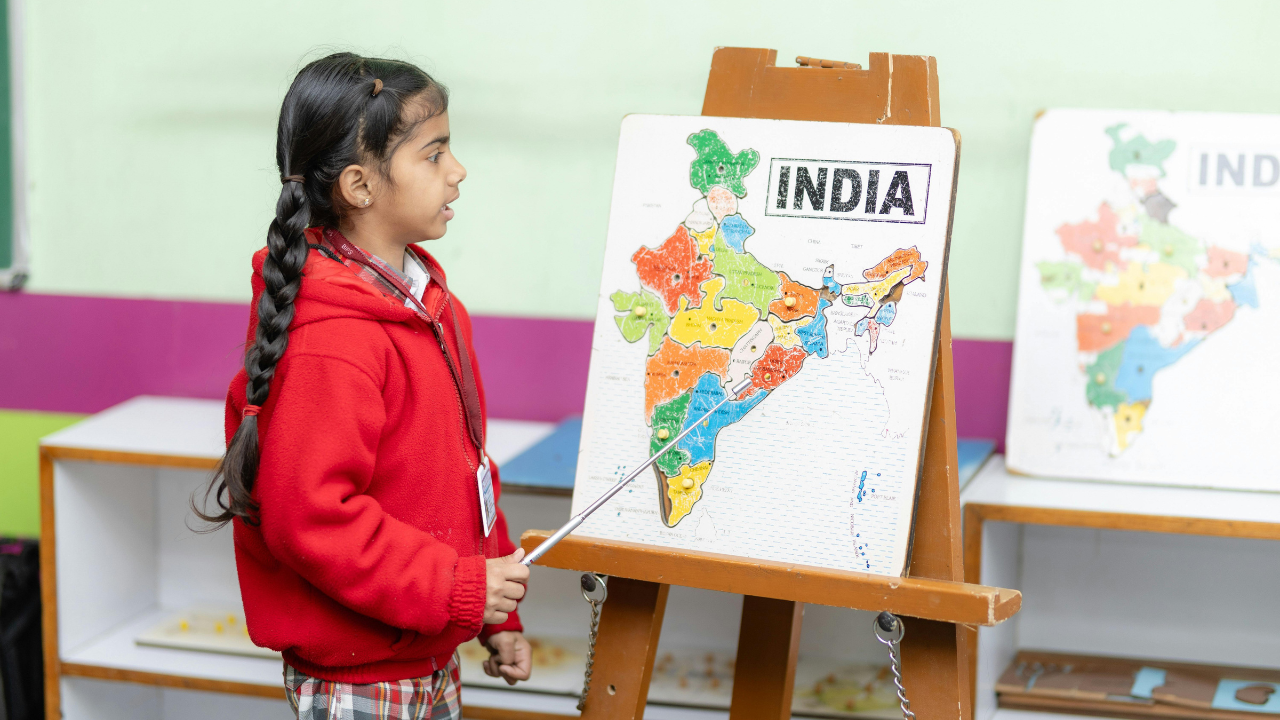
You can help your child learn geography at home by talking about places, maps, journeys, weather, buildings, landscapes and where things come from in everyday life. The aim is not to recreate school lessons. The useful part is giving your child regular, low-pressure chances to notice the world, use geographical words and ask simple questions with an adult.
1. Start with the places your child already knows
The easiest geography usually begins with familiar places.
Children understand new ideas more easily when they can connect them to something they have seen.
Your street, school route, local park, high street, bus stop, playground, library or nearest shop can all become useful geography. You do not need to turn them into a lesson. You can just notice things together.
You might say:
-
This road is quieter than the main road.
-
The shops are grouped together here.
-
The park is lower than the path, so the water collects there.
-
There are more flats near the station.
-
This field is open, but that street is built up.
These are small comments, but they help children think about place, land use, movement and environment.
A child who can talk about their local area is already beginning to think geographically. They are noticing what is where, what it is like, and how people use it.
You can keep it very simple. On a walk, choose one thing to notice. That is enough.
The practical takeaway: start with small moments in places your child already knows.
2. Use maps for real reasons
Maps make more sense when children use them for an actual purpose.
Children can find maps confusing when they only meet them as classroom diagrams. At home, maps can be much more practical.
Use a map when it helps answer a real question.
Where are we going? Which way is the park? How far is the beach? Is Scotland north or south of us? Which country is that football team from? Where did this story happen?
That kind of map talk helps children see that maps are tools, not just things to label.
You could use:
-
a paper map on a day out
-
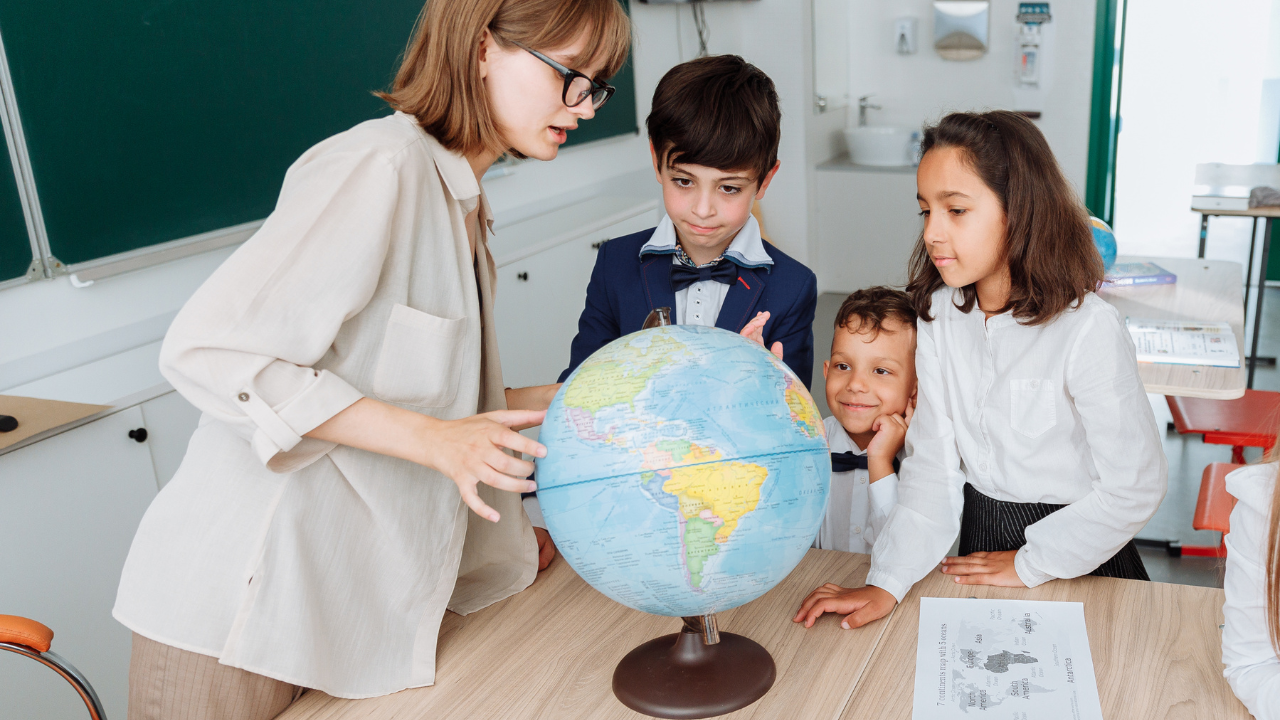
a globe to find countries
-
an atlas to look up a place from a book
-
a digital map before a journey
-
a simple hand-drawn treasure map
-
a map of the zoo, museum, park or shopping centre
The caution is not to overdo it. A child does not need a full explanation of scale, compass points and grid references every time they look at a map.
Sometimes the useful question is simply, “Where are we now?” or “Which way do we need to go?”
The practical takeaway: use maps when they solve a real problem.
3. Talk about journeys, not just destinations
Everyday journeys are full of geography.
The school run, a walk to the shops, a train journey, a car ride or a bus trip can all help children understand routes, distance, direction, transport and place.
You do not need to quiz them. Just talk naturally.
You might ask:
-
Are we going the same way as yesterday?
-
What do we pass first?
-
Why is this road busy in the morning?
-
Which route is quicker?
-
What changes when we leave the town?
-
How do you know we are nearly there?
Repeating the same route can actually help. Children start to notice patterns. They remember landmarks. They begin to understand near and far, left and right, uphill and downhill, town and countryside, busy and quiet.
Journeys also help children compare places.
A village may have fewer shops than a town. A city may have taller buildings and more traffic. A coastal place may have cliffs, beaches, harbours or sea defences. A rural area may have more fields, farms, lanes and open space.
The caution is to avoid turning every journey into a test. Children often learn more from calm noticing than from being put on the spot.
The practical takeaway: use journeys to talk about routes, landmarks, transport and change.
4. Notice human and physical features
One of the simplest ways to build geography is to help children notice what is natural and what has been built or changed by people.
Children do not always need the formal terms straight away, but they do benefit from hearing clear language.
Human features are things made or changed by people. Physical features are natural parts of the world.
At home, this can be very straightforward.
Human features might include:
-
roads
-
bridges
-
houses
-
shops
-
schools
-
farms
-
train stations
-
playgrounds
Physical features might include:
-
rivers
-
hills
-
beaches
-
forests
-
fields
-
cliffs
-
weather
-
soil
Once children understand human features and physical features, they can start to compare places more clearly.
A seaside town may have a beach, cliffs, hotels, cafés and a harbour. A city may have offices, stations, flats, parks and busy roads. A farming area may have fields, barns, lanes, crops and animals.
The limitation is that the real world is sometimes mixed. A park is managed by people, but it also has trees, grass, soil and wildlife. A river is physical, but people may build bridges, paths or flood defences around it.
That is not a problem. In fact, it makes the conversation better.
The practical takeaway: help your child notice what is natural, what is built, and how the two connect.
5. Bring geography into normal family life
Geography is easier to remember when it appears in ordinary life, not just in homework.
You can connect geography to food, weather, stories, sport, holidays, family history, animals, buildings and the news.
The trick is to keep it light.
If your child is eating a banana, you might look at the label and find the country it came from. If they are watching a football match, you might find the country or city on a map. If it rains for three days, you might talk about puddles, drains, rivers or flooding.
You can use everyday prompts such as:
-
Where did this food come from?
-
What is the weather like today?
-
Is this place near or far away?
-
Would people travel there by car, plane, train, boat or on foot?
-
What might homes look like in that place?
-
Is it hot, cold, dry, wet, flat, hilly, busy or quiet?
These questions help children connect geography to the world they already see.
Food is especially useful. Food labels can lead to maps, climate, farming, transport and trade, without needing a formal explanation.
Weather is useful too. Weather words such as cloudy, windy, frosty, humid, dry, mild and stormy help children describe the world more accurately.
The caution is not to make every moment educational. Children need normal family time too.
The practical takeaway: use ordinary life to make geography visible, but keep it relaxed.
6. Help your child compare places carefully
Comparing places helps children think more deeply, as long as the comparison is fair and respectful.
Children often compare places in simple ways. Hot or cold. Rich or poor. Big or small. Better or worse.
Adults can help make those comparisons more thoughtful.
Instead of asking, “Which place is better?” try asking, “What is similar?” and “What is different?”
You might compare:
-
your street and another street
-
your town and a city
-
a village and a seaside town
-
the UK and another country
-
a local park and a national park
-
a rainy week and a dry week
-
a place from a book and your own local area
The aim is not to create a perfect geography discussion. It is to help children avoid lazy comparisons.
For example, if your child is learning about a contrasting country, try not to reduce it to one image or one fact. Countries contain many different places, people, homes, climates and ways of life.
A simple question can help: “Do you think every part of that country looks the same?”
That one question does a lot.
It helps children understand that places are complex. It also helps them talk about the world with more care.
The practical takeaway: compare places by looking for real similarities and differences, not by ranking them.
What parents should avoid
The main thing to avoid is making geography feel like extra homework.
Home support works best when it feels light, useful and connected to real life.
Try to avoid:
-
turning every walk into a lesson
-
testing capital cities over and over
-
making maps feel like a memory challenge only
-
using stereotypes about countries or people
-
assuming geography is just flags, maps and continents
-
correcting every answer immediately
-
expecting children to understand abstract ideas too quickly
-
relying on screens without any adult talk around them
Songs, videos, books and apps can be useful. They can support vocabulary, memory and interest.
But the adult role still matters.
A short conversation before or after a video can make the learning stronger. “Where was that?” “Have we seen anything like that?” “Was that a human feature or a physical feature?” “What changed?”
The practical takeaway: keep geography curious, not pressured.
A simple way to help your child learn geography at home
You can use a simple notice, name, connect routine.
This works because it keeps things short. It does not require planning, printing or pretending your kitchen is a classroom.
-
Notice one thing
Choose something real.
It might be a hill, a road, a bridge, a puddle, a map, a building, a food label, a weather change or a place mentioned in a story.
-
Name it clearly
Give your child the useful word.
You might say route, coast, river, city, village, country, continent, weather, climate, human feature, physical feature, landmark or direction.
-
Connect it to something they know
Link the idea back to their life.
“That road is a route.”
“This park is a place people use.”
“That banana came from another country.”
“This hill is a physical feature.”
“That bridge is a human feature.”
-
Ask one question
Keep it to one question.
“What do you notice?”
“Why do you think it is there?”
“How is this place different from our street?”
“What might happen here when it rains?”
-
Leave it there
You do not need to stretch it into a long activity.
A useful two-minute conversation is still useful.
The practical takeaway: notice, name, connect, ask one question, then stop.
How parents can use this at home without making it a big thing
The best home geography is low-pressure and easy to repeat.
You do not need a timetable. You do not need specialist knowledge. You do not need to know every capital city or explain every weather system.
You can simply build small habits.
On a walk, notice one feature.
Before a journey, look quickly at the route.
When watching something, find the place on a map.
When the weather changes, talk about what you can see.
When reading a story, ask where it might be set.
When shopping, look at where one item came from.
This kind of low pressure support works because it is sustainable. Parents are busy. Children are tired after school. Nobody needs geography to become another battle.
The key is purpose.
If a map helps, use it. If a question starts a good conversation, ask it. If your child is not interested that day, leave it.
That is enough.
The practical takeaway: little and often is better than trying to create a perfect geography activity.
Final thoughts
Geography at home does not need to be complicated.
It is not about turning parents into teachers. It is not about testing children on countries, capitals and flags until they switch off.
It is about helping children notice the world around them.
Places. Routes. Weather. Buildings. Rivers. Food. Journeys. Maps. People. Change.
When children talk about these things with an adult, geography starts to feel real. They begin to see that the world is not just a list of places to memorise. It is something they live in, move through, ask questions about and gradually understand.
Silly School Education songs and videos can help children meet useful words and ideas in a memorable way. Used alongside real-world talk, maps, walks and everyday noticing, they can be a helpful part of the mix.
Not the whole answer.
Just one useful support.
And that is the balance.
Frequently asked questions
These answers are meant to be simple, practical and parent-friendly.
What age should children start learning geography?
Children can start learning simple geography very young. They notice home, nursery, school, parks, roads, shops, weather and journeys long before they use formal geography words.
For younger children, keep it concrete. Talk about near, far, inside, outside, road, house, park, rain, hill, map and journey.
Does my child need to memorise countries and capitals?
Some place knowledge is useful, but geography is not only memorising countries and capitals.
Children also need to understand places, maps, weather, landscapes, people, transport, environments and how places are connected.
How can I help if I am not confident with geography?
You do not need to know everything.
Start with what you can see. Look at a map together. Talk about your local area. Ask simple questions. Learn alongside your child when you need to.
That is a perfectly good way to support them.
Are geography videos and songs useful?
They can be useful when they support vocabulary, memory and interest.
They work best when an adult helps connect them to real places and ideas. A short conversation after a song or video can make a big difference.
What is the easiest geography activity to do at home?
The easiest activity is a noticing walk.
Go outside and look for one human feature and one physical feature. For example, a road and a tree, a bridge and a river, or a shop and a hill.
Keep it short. Talk about what you noticed. Then leave it there.
How often should we do geography at home?
A few small moments across the week is enough.
One map before a journey, one weather conversation, one food label, one walk, or one place from a story can all help. It does not need to be daily, formal or planned.