
This guide strips it back to the essentials: what phonics is, how to teach it well, and what genuinely helps children make progress.
Between following a phonics programme, managing a mixed-ability class and fielding questions from parents at the gate, it can be easy to lose sight of the principles that make phonics work in the first place.
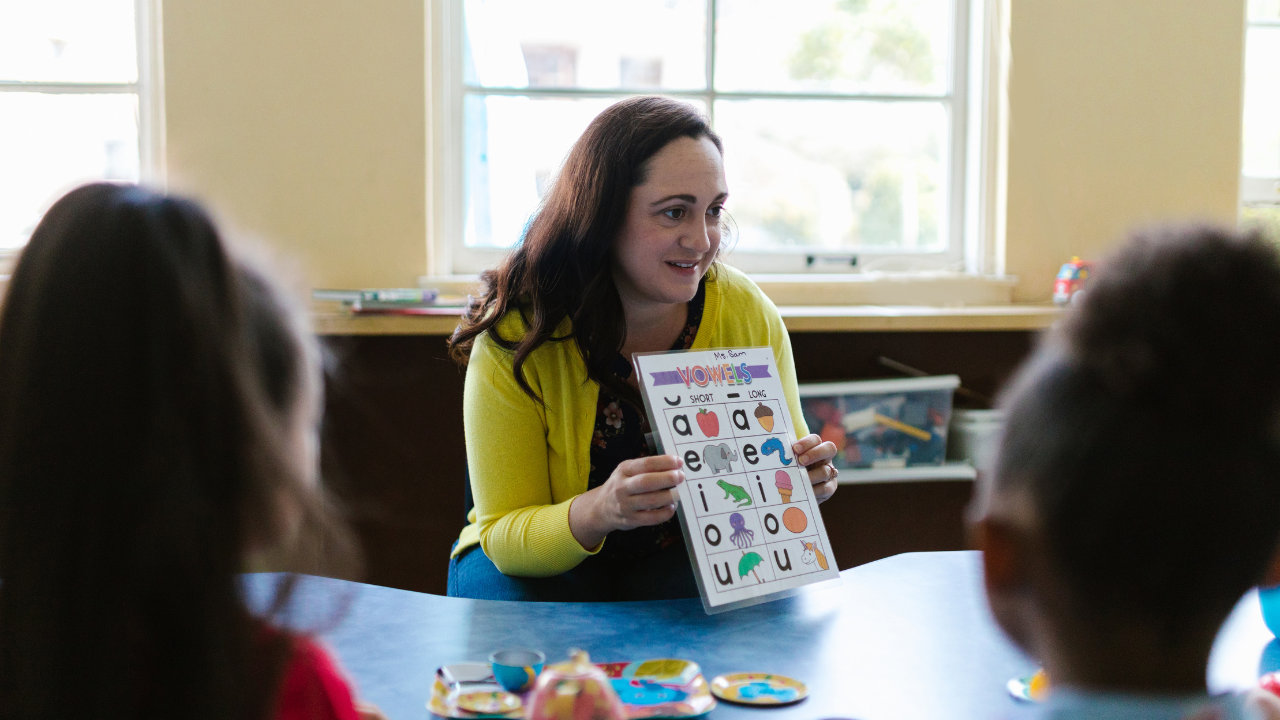
Quick answer: Phonics is a method of teaching children to read and spell by connecting letters to the sounds they make. Children learn to blend those sounds together to read words, and to break words apart into sounds to spell them. It's the dominant approach to early reading instruction in most English-speaking countries, and the evidence behind it is strong.
What phonics is actually trying to do
The aim of phonics is to give children a transferable strategy for reading, not a finite list of words to memorise. When a child can decode, they have a way into almost any word they encounter, including ones they've never seen before. That's what separates a reader who can tackle new texts independently from one who can only manage words they've already been taught.
This is why systematic phonics instruction matters. Occasional exposure to letter sounds isn't enough. Children need structured, cumulative teaching that builds their knowledge deliberately over time.
The key terms, explained plainly
These come up constantly in phonics teaching, planning and assessment.
Phoneme. A single unit of sound. "Cat" has three: c, a, t.
Grapheme. The written representation of a sound, which can be one letter, two or three. "Sh", "igh" and "ough" are all graphemes.
Blending. Pushing sounds together to read a word.
Segmenting. Breaking a word into its constituent sounds to spell it. The reverse of blending.
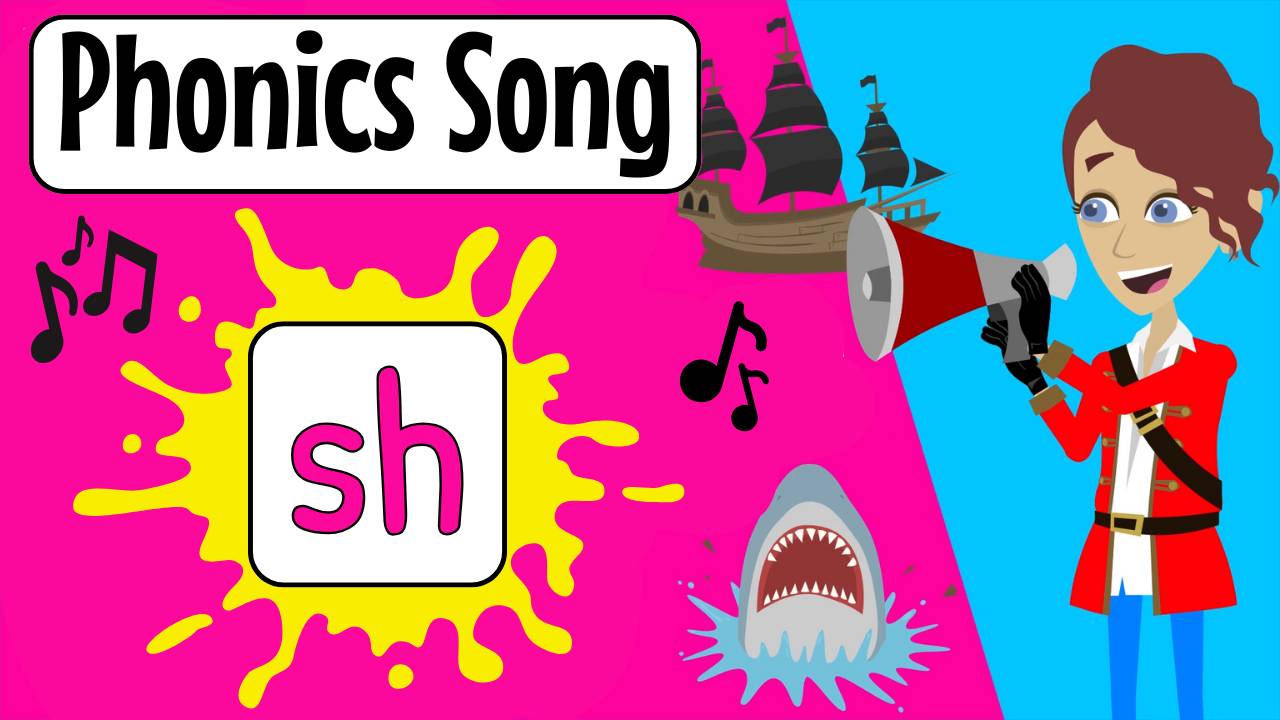
Digraph. Two letters that make one sound: "ch", "th", "sh".
Trigraph. Three letters, one sound: "igh", "tch", "ear".
Tricky words. Words that can't be reliably decoded using phonics, like "said", "was" and "the", and need to be learned through repeated exposure. Depending on the programme your school uses, these might also be called sight words or high-frequency words.
What effective phonics teaching looks like in the classroom
Phonics sessions in the early years are usually short. Fifteen to twenty minutes tends to be the sweet spot for most children.
A well-structured session typically introduces a new sound, practises reading and spelling words that contain it, and revisits sounds already taught. That last part matters as much as the new content. Children need repeated exposure to a sound before it consolidates, and without regular review, earlier learning fades quickly.
This is where songs, actions and rhymes earn their place. They give children an additional route into memory that doesn't rely purely on focused attention.
At Silly School Education, we've made phonics songs for single sounds, digraphs and trigraphs, and the pattern that consistently works best is short, simple and repeatable. You can explore the full Silly School phonics song library to see how these work alongside daily classroom teaching.
The specific programme your school follows will shape the sequence and the resources you use. Common options include Jolly Phonics, Read Write Inc, UFLI Foundations and Heggerty, among others. The resources differ, but the underlying principles are the same across all of them.
How phonics progresses through primary school
Most children begin phonics in their first year of formal schooling, typically between the ages of four and six depending on the country.
In the early stages, the focus is on learning individual letter sounds and beginning to blend simple short words. As children progress, they move on to more complex patterns: digraphs, trigraphs, vowel teams and multisyllabic words.
By the middle years of primary school, most children have built enough phonics knowledge to decode the majority of words they'll encounter. The focus then gradually shifts toward fluency and reading comprehension, though phonics knowledge continues to underpin spelling well into the upper primary years.
Many countries have a formal phonics assessment at some point in early primary school to identify children who need additional support. The specific tool varies by country. In England it's the Phonics Screening Check; in Australia some states use similar assessments; in the US various screeners are used depending on the state and district. Whatever the local tool, the underlying purpose is the same: catching difficulties early matters more than waiting for them to become obvious.
Supporting children who are finding phonics difficult
Some children take to phonics quickly. Others find it genuinely hard, and that doesn't mean they won't become confident readers.
The most important thing is to keep practice calm, consistent and low-pressure. Short sessions that feel manageable do more than longer sessions that feel like a battle. A child who is becoming anxious about reading needs less pressure, not more of it.
Early identification matters. A child who is significantly behind their peers in blending by the middle of the first or second year of school will benefit from targeted support sooner rather than later. Waiting for a formal assessment to flag it costs children time they don't need to lose.
Phonics difficulties can sometimes point to other factors: processing differences, attention challenges, speech and language needs, or simply a child who needs more time and a different way in. The earlier you notice, the more options are open to you and to them.

Helping parents understand what phonics involves
Parents often want to support reading at home but aren't always sure how. A little clear communication from school makes a real difference.
The key message is simple: reading together daily matters more than running phonics drills at home. Five to ten minutes of shared reading, where the child is doing some of the decoding and the adult is supporting where needed, is usually more valuable than drilling sounds separately.
It's worth telling parents to give their child a moment when they're sounding out a word, rather than jumping in straight away.
If your school has phonics songs the children know, encourage parents to sing them at home. It doesn't need to feel like homework to be useful.
Phonics is a strong foundation. For most children, it's the most effective route into reading, and the research consistently supports that. But it's one part of the picture.
Vocabulary, comprehension, fluency and genuine engagement with books all matter too, and phonics teaching alone won't build them. Read-alouds, discussion and wide reading work alongside phonics rather than separately from it.
Phonics gives children the means to decode. Everything else gives them a reason to want to.
Silly School Education has phonics songs and classroom videos covering single sounds, digraphs, trigraphs and tricky words, built to complement whatever phonics programme your school uses. You can try everything free for 7 days and explore the full library without any commitment.
Frequently asked questions
What age do children typically start phonics? It varies by country. In the UK and Australia, formal schooling and phonics instruction often begin at age four or five. In much of Europe and North America, children typically start formal school at five or six, with phonics beginning around the same time. The starting age differs; the sequence of instruction is broadly the same.
Does it matter which phonics programme our school uses? Less than you might think. Programmes differ in sequence, resources and terminology, but all systematic phonics programmes teach the same underlying skills. What matters most is that the programme is taught consistently and that children get enough repetition with each sound before moving on.
My students know the sounds but cannot blend. What helps? Blending is a separate skill from sound knowledge, and some children need focused, explicit practice at it. Short consonant-vowel-consonant words are the best starting point. Slowing the sounds right down and running them together gradually tends to work better than asking children to speed up. Keeping it low-pressure and game-like takes the performance anxiety out of it.
What is the difference between tricky words and sight words? Broadly the same thing, described differently depending on the programme. Tricky words is the term used in many UK-based programmes; sight words or high-frequency words is more common in US and Australian settings. Either way, the approach is the same: these words can't be reliably decoded, so children learn them through repeated exposure rather than sounding out.
How do I explain phonics to parents who learned to read differently? Keep it simple and positive. Most parents learned to read through some combination of methods, so phonics isn't entirely unfamiliar. Explaining that it gives children a reliable strategy for any word they encounter, rather than requiring them to memorise every word, usually lands well and reduces anxiety about the approach.
Is phonics effective for children learning English as an additional language? Yes, and it can be particularly useful. Because phonics teaches the sound system of English explicitly and step by step, it gives EAL and ESL learners a clear framework to work from, rather than relying on an instinctive feel for the language that takes longer to develop. Many EAL specialists find phonics songs especially effective for building sound-letter connections alongside vocabulary.